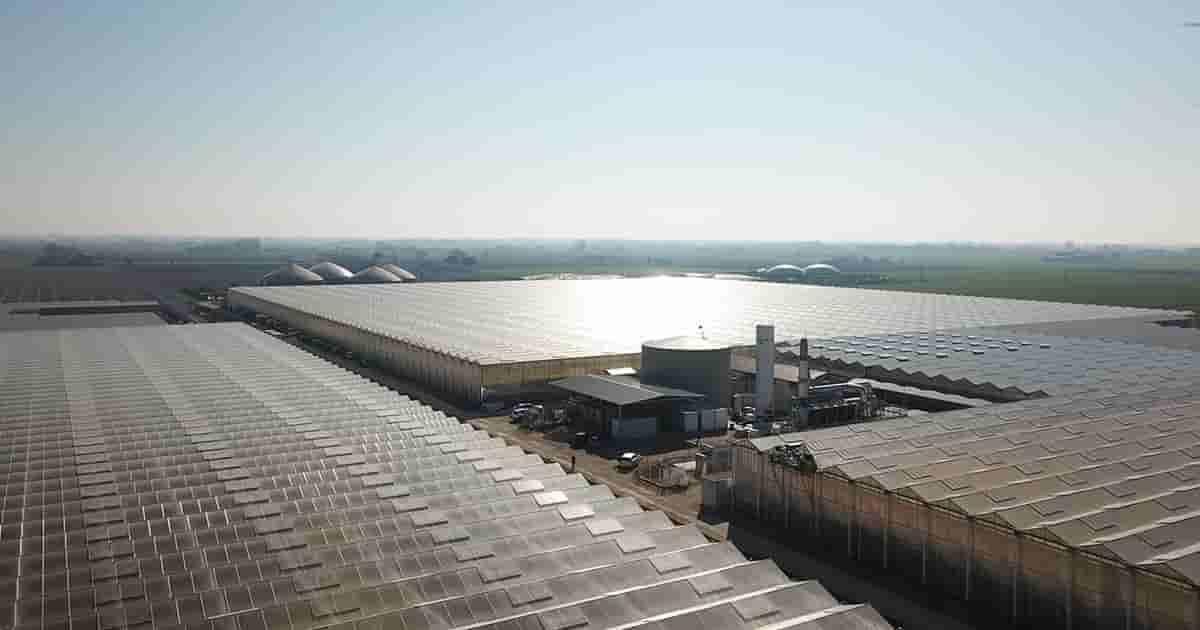
The Venlo greenhouse is the global benchmark for commercial controlled-environment horticulture. What appears to be a simple steel-and-glass structure from the outside is in fact a tightly integrated growing system, where every component works in tandem to deliver stable, crop-optimised conditions across multi-hectare sites.
Understanding the core Venlo greenhouse components — and how they interact — helps growers and engineering teams make informed specification decisions for long-term performance. Below is a complete breakdown of the structural parts and integrated systems that define a modern commercial Venlo glasshouse.
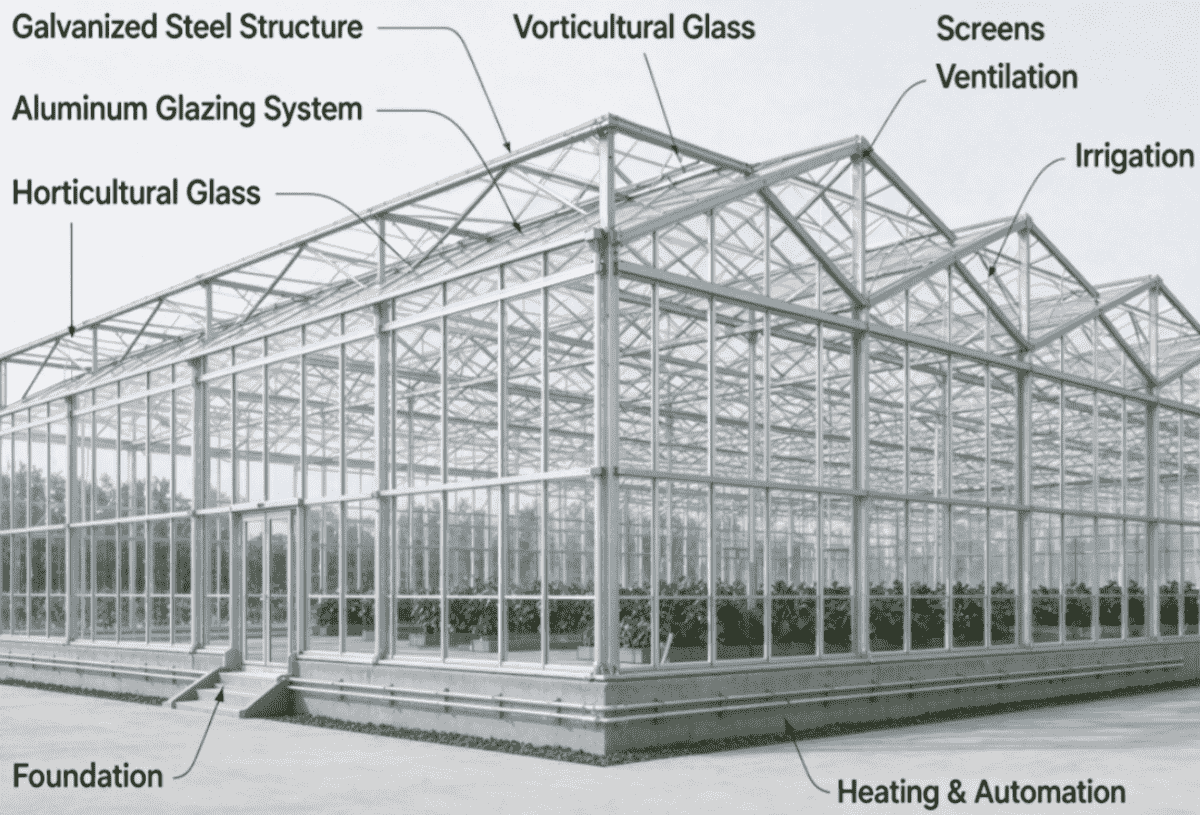
Every high-performance Venlo build is layered from the ground up, with each structural layer setting the performance baseline for the next.
The foundation is the load-bearing base of the entire structure, engineered to withstand dead load, snow load, wind load and the weight of all mechanical and climate systems. Its dimensional accuracy sets the alignment baseline for every steel column, gutter run and glass panel that follows.
For large-scale commercial projects, even minor foundation misalignment can cascade into fitting and sealing issues at the glazing stage, making precision at this stage critical for the rest of the build.
Forming the main structural skeleton, the steel framework includes vertical columns, roof trusses and gutters that define the Venlo design’s signature narrow bay spacing and pitched roof. Hot-dip galvanisation is the industry standard for corrosion resistance, ensuring long structural service life even in the high-humidity environment of intensive horticultural production.
This steel framework carries the full weight of the glazing, screen systems and climate equipment, so structural integrity directly impacts the safety and longevity of the entire greenhouse.
The aluminium glazing system acts as the interface between the steel structure and the glass envelope. It consists of precision-extruded aluminium profiles paired with EPDM rubber gaskets, which secure glass panels and create a continuous weathertight seal against air and water ingress.
Channel dimensions, gasket profiles and glass thickness must be carefully matched to ensure uniform compression and reliable long-term sealing.
For a deeper look at how these components fit together, see our <glass-aluminium-rubber seal assembly guide>
As the primary light-transmitting covering, horticultural tempered glass directly determines crop light intake and overall growing performance. It is available in clear, diffuse and anti-reflective specifications, with varying haze levels to suit different crop types and local sunlight conditions.
Beyond optical performance, consistent glass thickness and clean, finished edges are essential for reliable seating in aluminium glazing channels and uniform gasket compression across thousands of panels.
Our range of <horticultural tempered glass>is manufactured to tight thickness tolerances for consistent fit in standard glazing systems.
Installed internally (and in some cases externally), screen systems serve multiple critical functions for commercial Venlo greenhouses. Shade screens reduce peak light intensity and heat gain during summer months; energy screens trap warm air overnight to lower heating consumption and cut operational costs; insect screens provide physical pest exclusion to reduce reliance on crop protection products.
Together, these screens give growers granular control over indoor climate conditions without over-reliance on ventilation and heating systems.
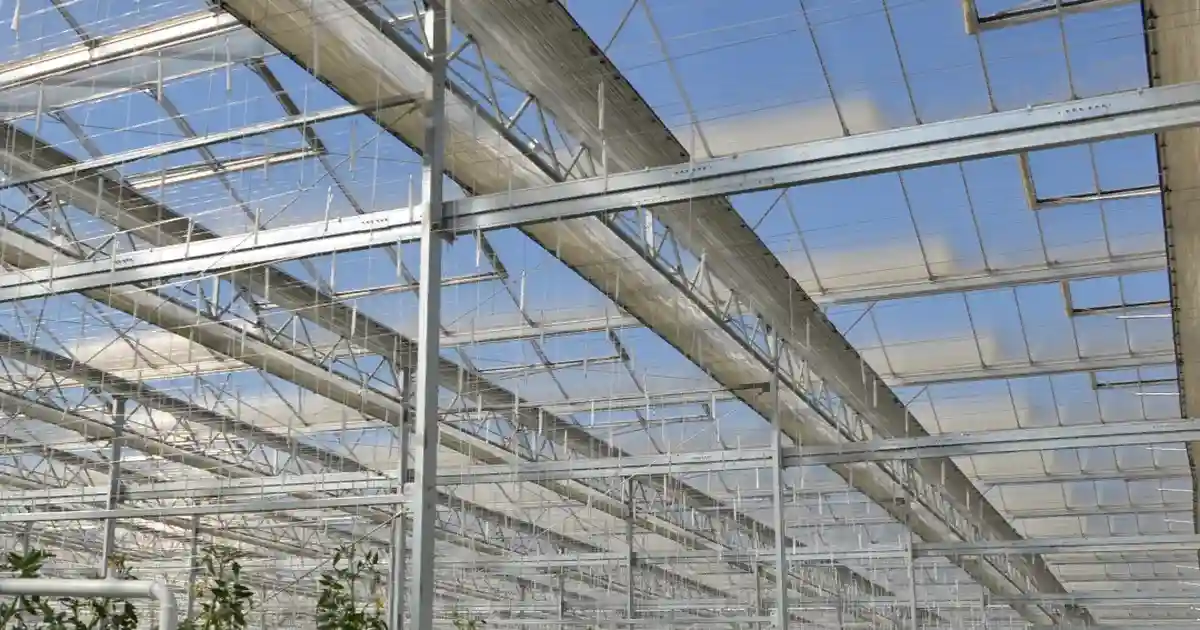
The structural shell creates the physical space, but these four integrated systems turn a Venlo greenhouse into a fully controllable horticultural production environment.
Roof vents and side wall vents form the core of natural ventilation, managing temperature, humidity and CO₂ levels by exchanging indoor and outdoor air. For large multi-hectare sites, natural ventilation is often paired with forced-air systems to ensure uniform conditions across the entire growing area, eliminating hot or cold spots that can impact crop uniformity.
Precision irrigation systems deliver water directly to the root zone, most commonly through drip lines for vegetable and soft fruit crops. Fertigation capabilities allow nutrient dosing to be automatically adjusted based on crop growth stage, weather conditions and real-time climate data, supporting consistent, optimised yields.
In cooler climates, heating systems are essential to maintain minimum overnight and winter temperatures. Hot water pipe heating is the most widely used solution in commercial Venlo greenhouses, with pipes run along crop gutters to deliver uniform heat distribution directly at plant level. Unit heaters are also used for supplementary heating and air circulation.
Centralised climate control software monitors temperature, humidity, light levels, CO₂ and irrigation in real time, and automatically adjusts vents, screens, heating and irrigation setpoints to maintain target growing conditions. Modern systems also support remote monitoring and data logging, allowing growers to optimise conditions across the full crop cycle and make data-driven decisions.
No single supplier delivers a complete, high-performance Venlo greenhouse. Large-scale commercial projects bring together civil engineering teams, steel fabricators, glazing installers, climate system integrators, automation specialists and raw material partners, each accountable for their part of the system.
Alignment between these teams is what keeps projects on schedule and avoids costly on-site rework. For example, glazing installation runs smoothly only when steelwork is accurately aligned, aluminium profiles meet specified dimensions, and glass panels are manufactured to consistent, tolerance-controlled thicknesses.
At Yuhua Glass, we specialise in manufacturing precision horticultural tempered glass for Venlo and commercial greenhouse projects worldwide. Our glass is produced to controlled thickness tolerances — 4 mm ±0.2 mm and 5 mm ±0.3 mm — with finished edges and batch consistency reporting, so it integrates seamlessly with standard aluminium glazing systems. We work alongside project teams, fabricators and installers to align specifications and delivery timelines, as one specialist partner within the wider project team.
See our <completed Venlo greenhouse projects> across Europe, the Middle East and beyond.
The performance of a modern Venlo greenhouse comes not from any single component, but from how well all parts work together. From the foundation slab to the climate control software, every element contributes to light uniformity, weathertightness, energy efficiency and long-term structural reliability.
Understanding the function of each component helps project teams make smarter specification choices, select the right partners, and deliver greenhouses that perform consistently for decades.
If you are planning a commercial Venlo greenhouse project and looking for a reliable horticultural glass supplier, reach out to our technical sales team to discuss your glazing requirements.